
Water-path firstSurface to footing
Richmond perimeter-drain planning
Perimeter drain inspection, repair and replacement in Richmond
Plan drain-tile inspection, cleaning, repair, replacement and sump work around the property’s symptoms, accessible evidence and discharge path.
- Trace the water path before accepting a full-dig recommendation
- Compare pipe, gravel, filter protection, discharge, and restoration together
- Ask for written options that separate evidence, assumptions, and inaccessible areas
Richmond-focused drainage planning. Submitted details are used only to follow up about this request.
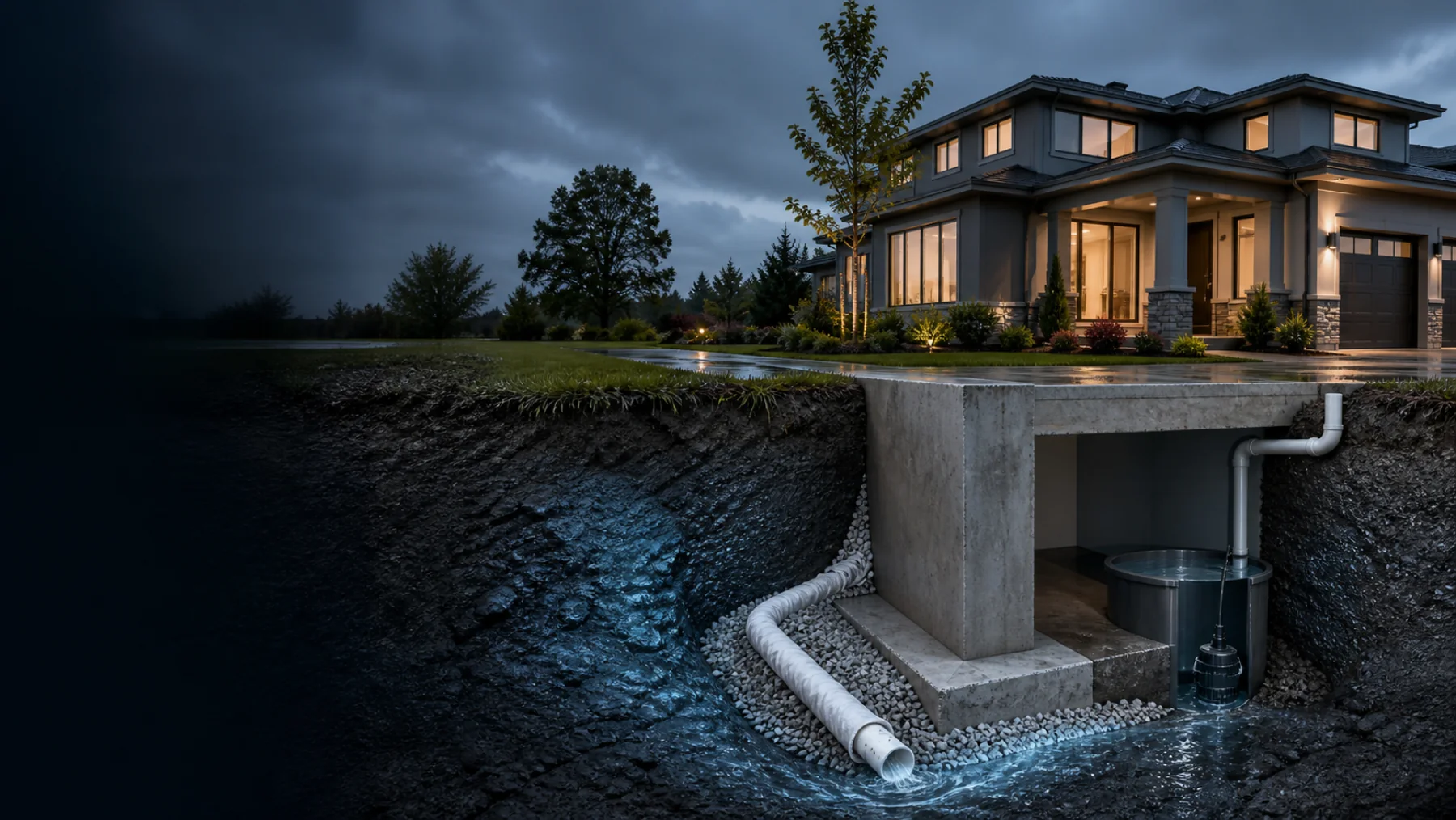
Original planning visualizationLow elevation · Drain tile · Sump · Safe discharge
Camera when accessibleEvidence before scope
Complete-scope checkPipe through restoration
Richmond contextLow elevation; site-specific
Interactive water-path assessment
Follow the water.
Then fix the system.
A wet basement can begin at the roofline, at grade, in a failed perimeter drain, or at the sump. Select each stage to see what a responsible assessment should examine.
Conceptual system view · actual configuration varies
01 · Surface load
Start above grade.
Downspouts, low spots, and reverse grade can send every rainfall toward the wall before the underground system has a chance.
- Trace roof and downspout discharge
- Read grade around every side
- Check ponding after rain
Richmond water-table simulator
Put the system
under pressure.
Move the conceptual groundwater load and watch the footing, drain, and sump response change. It makes below-grade planning factors easier to discuss without diagnosing a real property.
Conceptual response model · not an engineering calculation
Live system state
Groundwater load
Richmond’s low elevation can reduce passive fall and make pump readiness part of the whole drainage plan.
System under measurable loadCollection is carrying water; outlet condition and pump cycling deserve attention.
60-second homeowner diagnosis
Show us the pattern.
Three simple observations create a better first conversation. This guide stays entirely in your browser.
01 · Where does water appear?
02 · When does it arrive?
03 · What constrains the property?
Four linked solutions
The right fix is a system.
A complete drainage proposal connects diagnosis, collection, discharge, and restoration instead of treating one product as the answer.
Perimeter Drain Replacement
Rebuild failed sections with the pipe, washed gravel, filter protection, access, discharge, and restoration scoped together.
Explore service →Sump Pump Installation
Size the basin, primary pump, backup, controls, and discharge around the property’s real water load.
Explore service →Drain Camera Inspection
Use available cleanouts to see silt, roots, offsets, and collapse before opening the perimeter.
Explore service →Surface Drainage Corrections
Correct downspouts, low spots, and grade so the below-grade system is not fighting every storm.
Explore service →
The footing releases the load.
A clear perimeter line intercepts saturated-ground pressure before it reaches the floor edge. The basin is the controlled destination—not the emergency plan.
01Filtered drain02Sealed basin03Measured inflow
The pump is part of a team.
Primary capacity, backup power, check valves, controls, and alarms are sized around actual groundwater behaviour—not a product swapped by guesswork.
01Primary capacity02Backup readiness03Alarm strategy
Water leaves. And stays gone.
The final route clears the footing, avoids recirculation, and remains serviceable. That is the difference between pumping water and controlling it.
01Check valve02Safe discharge03Service access
System chapter01 / 03
A controlled decision
From first symptom to written scope.
Each step should reduce uncertainty without treating an online request as a diagnosis or a confirmed project scope.
- 01→
Describe the pattern
Where water appears, when it arrives, what the sump does, and what recent rain changed.
- 02→
Organize the property facts
Record grade, downspouts, access, cleanouts, foundation exposure, prior work, and any known outlet.
- 03→
Review the assessment questions
Separate observable evidence from assumptions and identify what a qualified provider would need to inspect.
- 04✓
Choose the next step
Compare the identified provider’s legal identity, insurance, relevant qualifications, permits, scope, price, restoration and warranty before work.
Signs worth investigating
The house is already giving you data.
One symptom may have a simple cause. Repeating patterns across rain events deserve a complete water-path assessment.
Photograph the pattern during rain if it is safe. Timing and location help diagnosis.Start with the symptoms →
Proof before excavation
An honest scope includes the mess.
The drain is only part of the job. Access, protected surfaces, discharge, compaction, grade, and restoration belong in the conversation before work starts.
- 01EvidenceWhat observations support the recommendation?
- 02AccessWhat must move, open, or be protected?
- 03DischargeWhere does collected water safely go?
- 04Close-upWhat backfill, grade, and restoration are included?
Ready for a factual first step?
Map the water. Protect the home.
Share the property and the pattern. Richmond Perimeter Drainage will follow up about the drainage request and the next assessment questions.